Sharpen Your Skills Motivational Design
A Rocket Pencil That Actually Lands—Not Just in Concept
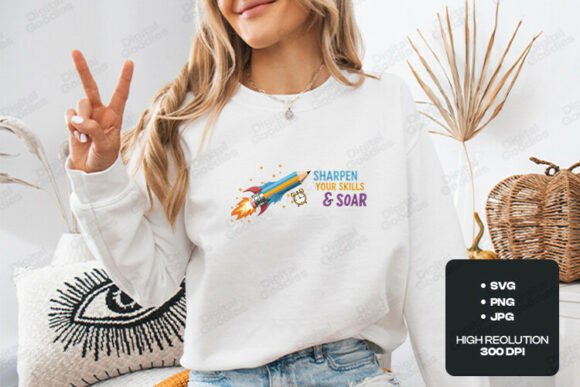
Let’s be honest: motivational embroidery designs often lean hard into cliché—chalkboards, coffee cups, or overused script fonts that vanish under thread. So when I opened Sharpen Your Skills Motivational Design, I braced for more of the same. Instead, I got something with real visual momentum: a pencil drawn like a rocket—pointed tip forward, subtle fins, clean lines—and an uplifting phrase that feels earned, not slapped on. It doesn’t shout “inspiration!” It leans in. That distinction matters—especially when you’re stitching it onto a customer’s favorite sweatshirt or a boutique’s limited-run tote bag.
This Is What It Looks Like When You Stitch It—Not Just Preview It
I tested Sharpen Your Skills Motivational Design on a midweight cotton twill tote bag—exactly the kind we stock for local makers’ markets. The rocket-pencil shape held up beautifully in satin stitch, with enough negative space between elements to avoid thread buildup. The lettering? Crisp, but not overly thin—no skipped stitches, even at moderate speed. No applique layers, no dense fill zones that bog down the machine or overwhelm lightweight fabric. It stitched cleanly in under 90 seconds on my commercial machine, and the finished piece looked intentional, not rushed.
That clarity translates directly to perceived value. A customer holding that tote doesn’t see “a nice quote.” They see craftsmanship—a handmade product with purpose. For Etsy sellers or small shop owners, that difference builds trust faster than any listing description.
Where It Shines (and Where It Asks for Help)
Sharpen Your Skills Motivational Design works especially well for:
- Custom apparel: Sweatshirts, crewnecks, and structured tees—fabrics with enough body to support the design’s confident silhouette.
- Embroidered patches: Its balanced proportions and clear outlines make it ideal for iron-on or sew-on versions, especially for craft fairs or school spirit items.
- Baby embroidery: On a soft organic cotton onesie, it reads as sweetly aspirational—not cutesy, not corporate—just quietly hopeful. Perfect for nursery decor or milestone gifts.
- Holiday embroidery: Think tea towels for teacher appreciation week or aprons for new grad chefs. It fits seasonal gifting without feeling dated.
But—and this is where real-world testing matters—it needs thoughtful placement on:
- Stretchy fabric: T-shirt knits demand proper cutaway stabilizer underneath. Without it, the rocket’s clean lines can distort near seams or side panels.
- Curved surfaces: Caps and beanies compress detail. I’d recommend simplifying the pencil’s fin details or reducing overall height by 15% before hooping.
- Dark fabric: The design relies on contrast. Test thread colors carefully—navy thread on black denim fades the message; bright white or metallic silver pops with intention.
- Tiny hoops (under 4”) or baby caps: The lettering stays legible down to ~3.2” wide, but anything smaller risks losing the rocket’s personality. Don’t force it.
Design Assets That Support—Not Sabotage—Your Craft Business
As a designer who supplies embroidery files to other makers, I pay close attention to how a design behaves *beyond* the first stitch. Sharpen Your Skills Motivational Design supports long-term use because it’s built for flexibility—not just one application. It scales cleanly from a 2.5” patch to a 6” chest embroidery. It works in both single-color runs and thoughtful two-tone combos (think graphite gray + electric blue). And crucially, it holds up in printable mockups—whether you’re building an Etsy listing or pitching to a boutique buyer, the digital preview matches the physical result.
That reliability reduces friction across your workflow: less re-stitching, fewer client revisions, smoother production for custom apparel orders, and stronger branding consistency across your handmade product line.
Practical Notes Every Embroidery Designer Should Check
Before cutting fabric or loading a hoop:
- Test on scrap fabric first—especially if using textured weaves or blends. Thread tension shifts fast on linen-cotton mixes.
- Review stitch density. If the file includes heavy fill areas (not obvious from the description), reduce density slightly for breathable fabrics like jersey or gauze.
- Confirm hoop size compatibility. Even if it fits in a 5×7”, check whether the design uses the full area—or leaves breathing room for re-hooping on larger garments.
- Inspect small details in your embroidery software: are pencil eraser highlights crisp? Does the rocket’s nose taper cleanly, or does it pixelate at low resolution?
- Try black-and-white mockups. This design’s strength is its contrast-driven simplicity—verify it reads strongly in monochrome for accessibility or minimalist branding.
- Compare light vs. dark fabric backgrounds in your design prep. What reads bold on cream may disappear on charcoal unless thread color is adjusted.
- Use appropriate stabilizer: medium-weight cutaway for stable fabrics, tear-away for stable cottons, and fusible for lightweight linens.
- Verify licensing terms before selling finished products or bundling the file with other design assets. Since it’s listed as a Graphics item in the T-Shirt Designs category, confirm whether commercial embroidery rights are included.
Final Thought: It’s Not Just a Design—It’s a Conversation Starter
I recently stitched Sharpen Your Skills Motivational Design onto a denim jacket for a high school art teacher’s retirement gift. At the farewell lunch, three colleagues asked where she got it—not just “what’s that?” but “can I get one too?” That’s the quiet power of this piece. It doesn’t decorate. It connects. For creative entrepreneurs, that resonance is worth more than perfect registration or flawless satin stitch. It turns a simple embroidered patch into a shared moment, a personalized gift into a keepsake, and a small shop product into a story people want to wear.