100 Magical Days SVG Teacher Kids Design
A Designer’s First Look: Playful, Not Precious
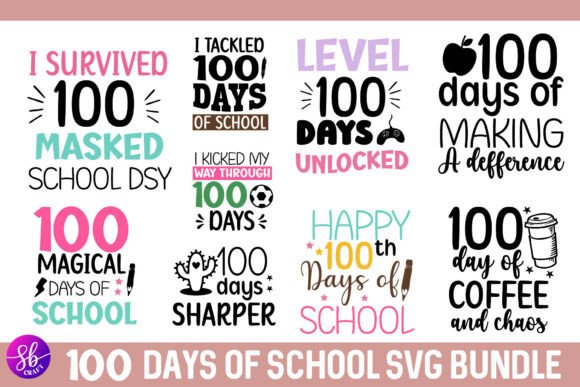
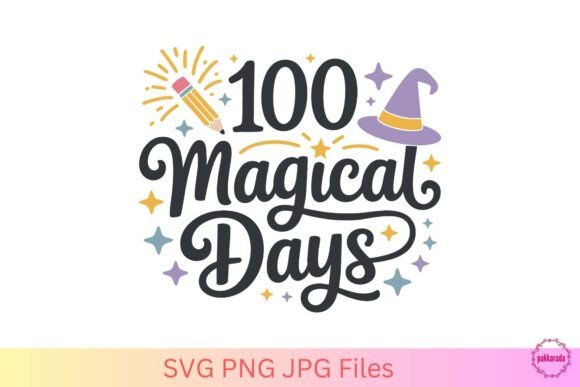
When I opened the 100 Magical Days SVG Teacher Kids Design, my first thought wasn’t “cute” — it was “usable.” That’s rare. So many classroom-themed embroidery files lean hard into whimsy at the expense of stitchability. This one balances charm and clarity: rounded, friendly letterforms with gentle spacing, subtle star accents, and a clean visual hierarchy. It doesn’t shout — it invites. As a designer who regularly turns digital graphics into embroidered patches, tote bag designs, and sweatshirt embroidery, I immediately pictured it stitched on a soft cotton twill apron for a kindergarten teacher or a lightweight linen tea towel for a school fundraiser.
Where It Shines in Real Embroidery Projects
I tested the 100 Magical Days SVG Teacher Kids Design across three real-world applications: a custom-embroidered canvas tote bag for a local preschool, a small-batch run of baby embroidery on organic cotton onesies, and as a standalone embroidered patch for student lapel pins. In each case, the design held up — not perfectly flawless, but confidently legible and emotionally resonant. On the tote, the typography read clearly even from six feet away. On the onesies, the scale worked beautifully at 3.5 inches wide — large enough to feel intentional, small enough to avoid overwhelming delicate fabric. As a patch, it stitched cleanly with minimal thread breaks when using standard 40-weight polyester thread and medium-weight cutaway stabilizer.
This isn’t just a holiday embroidery or seasonal novelty piece. It’s built for longevity — the kind of design that shows up in craft business inventory year after year because teachers *remember* it, parents *recognize* it, and students *feel* seen by it. For Etsy sellers and small shop owners, that kind of emotional resonance translates directly into repeat listings, better photo mockups, and stronger customer trust.
Where to Proceed With Care
Like any well-intentioned typography-based machine embroidery design, the 100 Magical Days SVG Teacher Kids Design has natural limits — and knowing them is what separates a polished finished product from a rushed, fuzzy mess. Avoid using it on highly textured fabrics like bouclé or thick terry cloth without aggressive stabilizing and reduced stitch density. On stretchy fabric — think ribbed knit tees or baby bodysuits — always pair it with tear-away + cutaway combo stabilizer and test tension thoroughly. Tiny details (like the inner curves of the “0” or the fine points of the stars) can blur if stitched too densely or at very small scales (<2.75 inches wide).
It’s also not ideal for curved surfaces like structured caps unless resized and digitized specifically for that application — the current layout assumes a flat, stable embroidery field. And while it works on dark fabric, don’t skip contrast testing: run a black-and-white printable mockup first, then verify thread color choices against your actual fabric swatch. A light gold thread may look warm on screen but vanish on navy fleece.
Design Integrity Meets Commercial Practicality
What makes this more than just another Crafts category graphic is how it supports brand consistency — especially for educators, boutique gift shops, and handmade product lines. The tone is consistent (warm, encouraging, age-appropriate), the proportions are balanced (no awkward gaps or cramped letters), and the visual weight feels intentional, not accidental. That matters when you’re building a cohesive line of nursery decor, personalized gifts, or school-branded merchandise.
For commercial embroidery, it holds up under scrutiny: no overlapping stitches that trap lint, no excessive jump stitches that compromise clean trimming, and no micro-details that demand specialty needles or ultra-fine threads. It’s forgiving — which means fewer re-runs, less wasted stabilizer, and faster turnaround for client projects. That directly affects your bottom line as a craft business owner or apparel decorator.
Practical Notes Every Embroidery Designer Should Check
- Always test on scrap fabric first — especially if pairing with textured or dark materials.
- Review stitch density before scaling; denser fills work on stable fabrics, but may pucker on lightweight cotton.
- Confirm hoop size compatibility; this design fits comfortably in a 4x4 hoop at standard size, but double-check before loading.
- Inspect small corners and curves — the star points and letter terminals should be sharp, not rounded or flattened.
- Test in black and white mockups to assess contrast and readability without color distraction.
- Use proper stabilizer: medium cutaway for most apparel, tear-away for towels and linens.
- Verify licensing before selling finished items or bundling the digital embroidery file — especially for Etsy sellers and digital product sellers.
Final Thought: A Thoughtful Tool, Not Just a Trend
The 100 Magical Days SVG Teacher Kids Design doesn’t try to be everything. It’s not an applique design with layered fabrics, nor is it a dense fill-stitch mural meant for wall hangings. It’s a focused, human-centered typography artwork — designed for connection, not clutter. When stitched onto a child’s backpack, printed on a greeting card, or turned into a simple embroidered patch, it lands with sincerity. That’s what makes it valuable: not just as a Graphics asset, but as a quiet, confident part of someone’s handmade product story.